
Here's the mistake almost everyone makes first: they feel a draft under the garage door, see daylight at the corners, or notice a puddle after a nor'easter, and they reach for a caulk gun. It's cheap, it's fast, and it's sitting in the garage already. The problem is that caulk doesn't flex. A garage door moves every time it opens and closes, and through a Monmouth County winter it also expands and contracts with freeze-thaw cycles. Caulked seams crack within a season, and worse, caulk often traps water against the bottom panel instead of shedding it. On steel doors that means rust along the bottom edge. On the original wood doors common in older Highlands homes, it means slow rot you won't see until the panel is soft.
What's Actually Letting In Drafts, Water, Pests, and Dust
Garage doors rely on three separate weatherstripping pieces, and homeowners usually only notice one of them failing:
- Bottom seal (astragal): the rubber or vinyl strip along the floor edge, held in a retainer or a U-shaped channel. This is the one that cracks, flattens, or tears from scraping on gritty, salted pavement all winter.
- Side and top seals (J-seal or flush-mount strips): these run along the vertical tracks and header, and they're what keeps wind-driven rain out during a nor'easter.
- Threshold seal (optional): a strip glued to the garage floor itself, useful where the slab has settled or cracked unevenly, which is common in older construction.
If you're getting drafts, dust, or the occasional mouse, start with the bottom seal. It does the most work and fails the fastest.
Tools You'll Need
- Tape measure
- Utility knife
- Flathead screwdriver or pry bar
- Replacement seal (rubber bulb-type for wood door tracks, or a T-style/beaded strip for aluminum retainers, cut to your door's width)
- Soapy water or silicone spray for feeding the seal into the channel
- Shop vac or stiff brush for cleaning the track
- Work gloves
Step-by-Step Replacement
- Identify your retainer type. Open the door partway and look at the bottom edge. It's either a metal U-channel (common on steel doors) or a wood track (common on older wood doors). This determines which seal profile you buy.
- Measure the door width at the bottom panel, not the opening, since trim can throw off the number by an inch or more.
- Lower the door fully and disconnect the opener by pulling the release cord, so the door won't cycle while you're working.
- Pry out the old seal from one end of the channel. It usually pulls free once you get it started; on wood tracks you may need to remove a few retaining staples or nails.
- Clean the channel of old caulk, dirt, and road salt residue. This is the step most people skip, and it's why new seals fail early — they're sitting in grit that keeps wearing at the rubber.
- Cut the new seal about an inch longer than the door width; you'll trim the excess after it's seated.
- Feed the seal into the channel from one end, using a little soapy water on stubborn sections. Work it through in one continuous pull rather than forcing sections in from the middle.
- Lower the door and check contact. The seal should touch the floor evenly along its full width with no light showing underneath. If one side gapes, the door itself may be slightly out of level.
- Replace side and top strips the same way, following the existing track and trimming to length.
What a Homeowner Can Handle
Bottom seal replacement, side and top weatherstripping, and cleaning out the tracks are all reasonable DIY jobs with basic tools and an hour of patience. Most hardware stores carry universal seal stock you cut to size.
What Needs a Technician
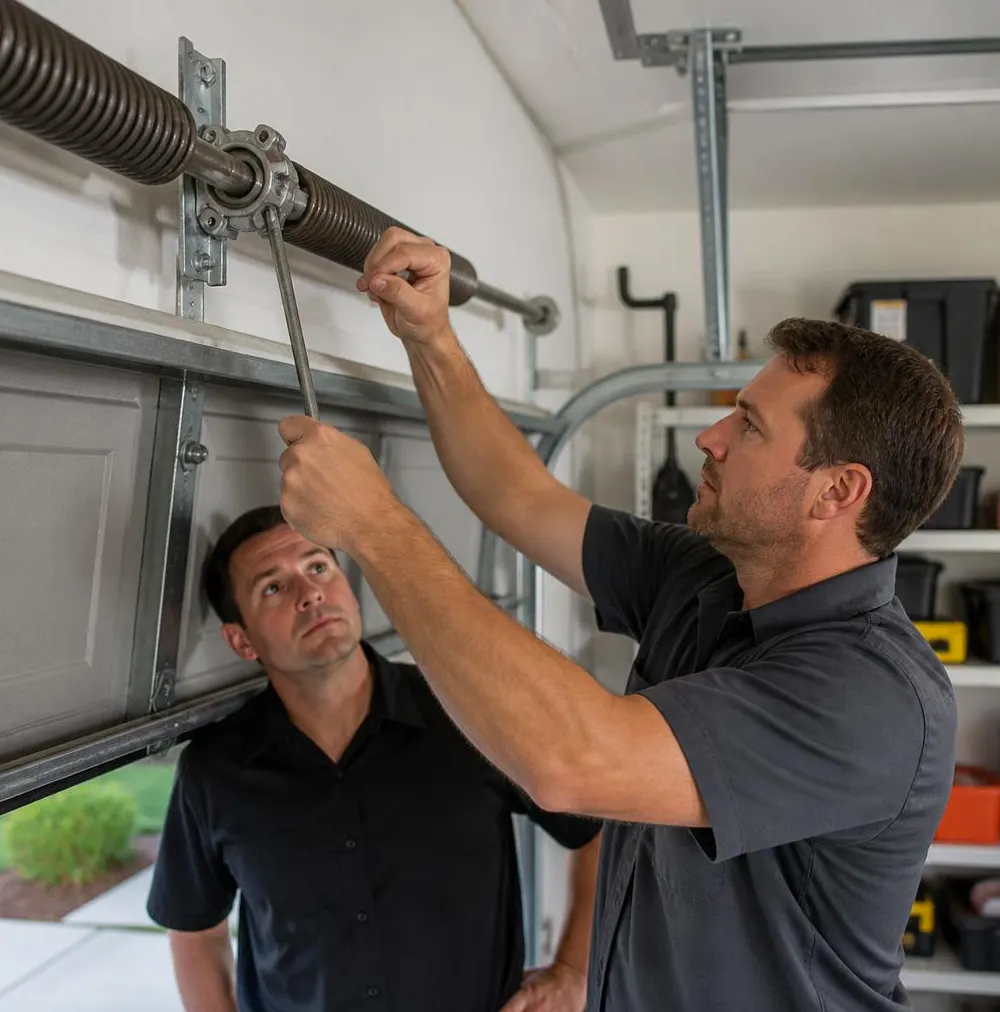
Call in a pro if the door won't seat evenly no matter how the seal is adjusted — that's usually a sign the door is out of level or the rollers and track have shifted, not a seal problem. Same goes for a cracked or settled concrete slab that needs grinding before a threshold seal will work, a rotted wood jamb or bottom panel on an original door, or any situation where the door needs to come off the track to get the job done safely. Torsion springs under tension should never be part of a DIY seal job.
When to Call Highlands Garage Door
If you've replaced the bottom seal and still have drafts, water intrusion, or a door that won't close flush, that's usually a leveling or hardware issue layered on top of the seal problem. Highlands Garage Door handles this as part of routine garage door maintenance, checking track alignment, roller condition, and spring balance so the new seal actually does its job through the winter. If the bottom panel itself has rot or rust damage, that's a repair call before it spreads.
If you're in Highlands, Atlantic Highlands, Rumson, Red Bank, or anywhere nearby in Monmouth County and want your garage door ready for the freeze-thaw season ahead, give Highlands Garage Door a call — we show up when we say we will.